
 WhatsApp
 Nextdoor
 Facebook
 X
 LinkedIn
 Threads
 Bluesky
 Reddit

Underwater robot to chart Richardson Bay's eelgrass meadows
So far the project only maps and monitors. The agency hopes to fund robotic planting next, with a $1.9 million grant.
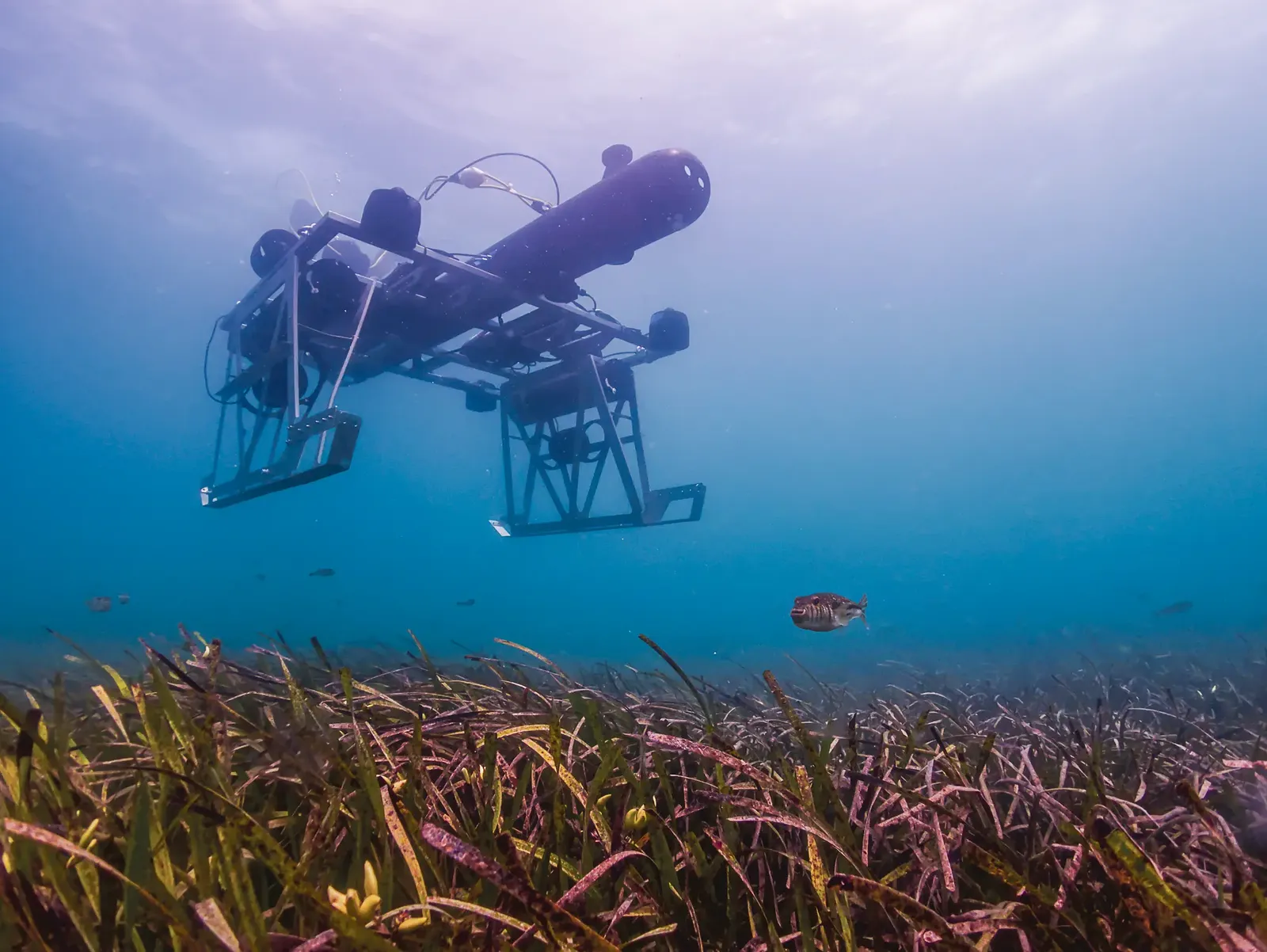

Like the shark it’s named for, Mako will cruise silently along the floor of Richardson Bay, hunting. But this predator is a robot, and what it’s hunting is eelgrass — the waving undersea meadows that are vital to the bay’s ecology.
Starting this month, the Richardson Bay Regional Agency will use an underwater drone to map and monitor Richardson Bay eelgrass beds. The bay agency has enlisted San Francisco-based Ulysses Ecosystem Engineering to study eelgrass beds using an autonomous underwater vehicle named Mako.
A $250,000 grant from the Marin Community Foundation will fund the project, a one-year award running through June 30, 2027.
Eelgrass is an ecological scaffold for marine life, home to a host of invertebrates and a preferred spawning ground for herring. Studies have shown it buffers wave action, improves water quality and sequesters carbon dioxide from the atmosphere. Richardson Bay’s eelgrass beds are the second largest in San Francisco Bay and among the largest on the West Coast. Eelgrass, however, is in retreat worldwide because of shoreline development and pollution.
Read the complete story in our e-edition, or SUBSCRIBE NOW for home delivery and access to the digital replica.
Comment on this article on Nextdoor.

Support The Ark’s commitment to high-impact community journalism.
The Ark, named the nation's best small community weekly for 2026, is dedicated to delivering investigative, accountability journalism with a mission to increase civic engagement and participation by providing the knowledge that can help sculpt the community and change lives. Your support makes this possible.