


Tiburon pastor, radio host and surrogate father Jerry Buckner served generations

Updated: Sep 10
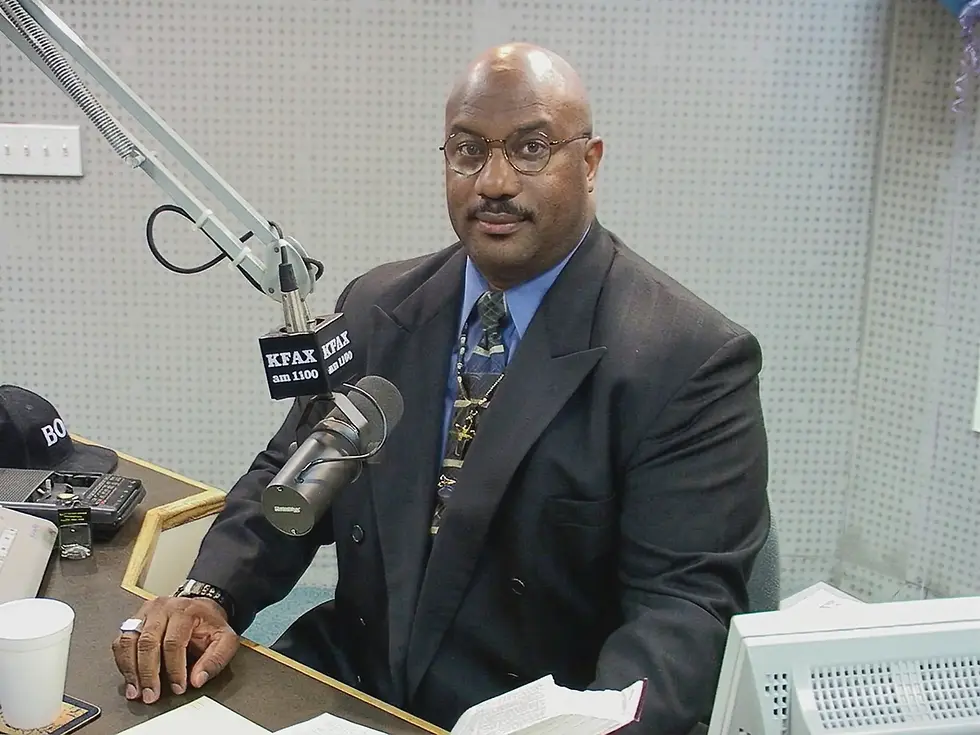
The Rev. Jerry Buckner, a Tiburon pastor, author and radio host who became a father figure to generations of young men, died Aug. 20 at MarinHealth Medical Center in Greenbrae. He was 74.
The cause was neuroendocrine carcinoma, his son Benjamin Buckner said.
Buckner mentored dozens of young men, Benjamin said in an interview, and many of them lived in the family’s home.
Dante Sumpter was one of them. He was 13 in 1989, growing up in Vallejo in a family that battled drug addiction, and he said in an interview that he was lost.
“I was a good kid, but at the end of the day, the choices were becoming this or that,” he said. “A lot of my peers were really disturbed kids that were going through things like me, but they actually were acting these things out.”
Sumpter signed up for a counseling program Buckner ran at Franklin Middle School. Buckner, the senior pastor at Tiburon Christian Fellowship, invited him to church. Then he started making the drive himself.
“He drove all the way from Tiburon to pick me up in Vallejo, Sunday after Sunday,” Sumpter said.
Buckner became a father to him, Sumpter said.
“He introduced me to God in a way that was extraordinary,” he said. “And it made me the man that I am today. Although I am not without fault, I know God in a way that a lot of people don’t know because of him.”
Sumpter, who now works in the optical department at Kaiser Permanente in Santa Rosa and is married with five daughters, is not the only one with stories about Buckner’s influence on his life.
Patrick Peters was 24 when he met Buckner, five years after his mother died. He had grown up in Houston without a father, he said in an interview. He moved into the Buckners’ house and stayed three years.
“(Buckner) was the father that I wish I’d had in my life,” Peters said. “He taught me the true value of family.”

Buckner had lived in Tiburon since 1978. He and his wife, Nancy, were high school sweethearts who married on June 11, 1971, his 19th birthday. They raised two sons and three daughters at The Hilarita apartments. The Ark described him in 2011 as a spiritual leader there. Nancy was a nurse at Marin General Hospital, now MarinHealth Medical Center.
For more than 30 years, his voice went out across the Bay Area on Saturday nights. “Contending for the Faith,” his live call-in program on KFAX AM 1100, took questions about Christianity from anyone who dialed in, and listeners came to know him as the Bay Area’s “Bible-answer man.” He taught at Gateway Seminary in San Leandro and wrote two books, “Biblical Propositions Supporting the Trinity” and “The Essentials of the Historic Christian Faith.”
He was also, for a stretch of the 1990s, the reason a CNN crew came to Tiburon. The antique cast-iron lawn jockeys on Ark Row had been repainted with white skin tones after a Black visitor complained about them. Buckner argued the statues honored Black riders rather than demeaned them, and he wanted their original color restored.
From the pulpit to the radio
Jerry Lee Buckner was born June 11, 1952, in Bakersfield to Orelia Taylor and Wilber Buckner. He and his siblings lived with their mother in the Bakersfield projects after their parents divorced and, in a 1999 interview with The Ark, he said education was what carried him and his brother and two sisters out of poverty. All four graduated from college, two with graduate degrees, and he said he was proud that his mother earned her high school diploma in her 60s.

Buckner attended East Bakersfield High School. According to his family, he was an All-City rusher in football and a track standout whose relay team still holds the school record in the 4x100 relay. He was inducted into the East Bakersfield Hall of Fame this year, an honor the family said brought him great happiness.
He earned an associate degree from Bakersfield College and a bachelor’s degree in religion from California Baptist College in Riverside. He went on to earn a master’s degree in divinity from Golden Gate Baptist Theological Seminary, then located in Strawberry. He earned a doctorate in ministry from San Francisco Theological Seminary in San Anselmo.
Buckner spent 10 years as a Southern Baptist missionary at the Fillmore Christian Center in San Francisco. He was preaching in Tiburon by 1994, when The Ark described him as a nondenominational minister holding services in his own home, and his congregation was meeting under the Tiburon Christian Fellowship name by 1996. Buckner started the ministry in his Tiburon home in 1980, Benjamin said. It outgrew the house and in 2006 moved to a rented building next to Hall Middle School in Larkspur, where it met for 19 years. After that space was converted to offices, the congregation moved to Sausalito in August 2025. The fellowship keeps the Tiburon name and a post-office box in town.
Buckner’s entry into radio came in the mid-1990s, when KFAX host Craig Roberts invited him on to talk about the Million Man March. Nation of Islam leader Louis Farrakhan organized the gathering of Black men in Washington, D.C., in October 1995. Buckner, a Black minister who studied cults and religious movements, was a critic of the group. He told The Ark in 1995 that he did not attend the march because of Farrakhan, whom he accused of perpetuating hate.
“We had him back for a subsequent visit,” Roberts said on KFAX in a tribute episode that aired Aug. 29. “You just click with somebody. And Dr. Buckner and I clicked.”
Buckner filled in for Roberts during a vacation, and after the broadcasts were well received, KFAX offered him the Saturday-night show. It debuted Nov. 11, 1995.
“The general manager of the station at the time, Ron Walters, and I got to talking about the station and programming needs,” Roberts said. “And he said, you know, I would love to do a live call-in talk show on Saturday evenings. And then it went from there into, ‘and wouldn’t it be great to have a Bay Area-based apologetics program?’”
Over the next 30 years, “Contending for the Faith” drew listeners every Saturday night. KFAX aired the final episode Aug. 29, nine days after Buckner died, and gave the hour to callers remembering him.
One of them, a listener named Jermaine, said Buckner’s program is what pushed him deeper into the Christian faith.
“I was a San Francisco kid myself running around the streets, not getting into too much trouble, but I’d never thought I would actually forego hanging out with people just so I can get home on Saturday nights at seven o’clock to listen to ‘Contending for the Faith,’” he said. “And because of Dr. Buckner, I found myself in my first Christian seminar run by him.”
Buckner’s specialty was apologetics, the practice of defending Christian belief with reasoned argument.
Off the air, Roberts said on that broadcast, Buckner would linger in restaurants after the check was paid. He would still be talking about faith with a cashier or a server while the rest of his party waited at the car.
Albert Gria met Buckner around 2008 through the church and often handled audio and video for the ministry. He said in an interview that Buckner was not shy about sharing his faith in public.
“He was very loving and caring and just loved people and really spread the word of the faith of Jesus Christ to everybody that he would encounter,” Gria said. “And even when people were going through stuff in their personal life, he had a way of just connecting with them and them opening up about stuff like that. It was a pretty unique gift.”
Black jockey statues draw national attention
In the mid-1990s, Buckner drew national attention over the skin color of a handful of lawn jockey statues in Tiburon.
The dispute stretched back to June 1984, when a Black woman from Palo Alto, Phyllis Randall, visited Tiburon and saw the black cast-iron jockey statues along Ark Row. She wrote to then-Mayor Larry Smith calling them “atrocities” and “a strong reminder of one of the most horrific periods of American history.”
In response, the late Ed Zelinsky, who owned Main Street Properties, had the Ark Row jockeys repainted with white skin tones. The lantern-holding figure in front of the Tiburon Playhouse was lightened to an olive hue.
Ten years later, Buckner disagreed. Black jockeys were an important part of American history, he argued, and the statues honored them. Black riders won 15 of the first 28 Kentucky Derbies, and 13 of the 15 jockeys in the inaugural 1875 race were Black. Buckner said he had checked with horse-racing experts in Atlanta and with administrators at the Kentucky Derby Museum in Louisville.
“The Black jockey was highly respected,” he told The Ark in 1994. “These statues had nothing to do with servitude. The horse was a thing of dignity, and it took ability and skill to tame and breed horses. We should be proud of our Black history and these statues are part of that history.”
Buckner pressed Zelinsky to restore the jockeys to their original color. A CNN crew came to town that summer to interview both men and film Ark Row. The earlier round had already been picked up by the Los Angeles Times and the International Herald Tribune, and letters reached The Ark from as far away as Rome and Paris.
On Oct. 2, 1996, Zelinsky and Buckner dedicated a Black jockey statue in front of the Tiburon Playhouse. Zelinsky had bought it from the Kentucky Derby Museum and gave it to the town.
Not everyone was persuaded. Buckner told The Ark in 1995 that he had been labeled an “Uncle Tom” by cultists, militants and the poor Black community.
“All this anger is not always justifiable,” he said. “It’s as if they say ‘it’s my race, right or wrong, but mine.’”
Buckner was still writing about race late in life. Ten weeks after George Floyd was killed by a Minneapolis police officer in 2020, he published an op-ed in The Bakersfield Californian, the paper in his hometown. The country would not find answers through “fighting racism, making people feel guilty over past sins, supporting some political parties or through the media,” he wrote. He named fatherlessness as the root problem in Black communities and questioned whether the Black Lives Matter movement weighed Black-on-Black crime equally.
“God has called upon us to get to the root of the problem,” he wrote. “When we do, we discover all lives matter. We are all created in the image of God equally.”
A father of faith
Benjamin Buckner said his parents moved to Tiburon to give the family a strong foundation.
“Our dad was always our rock,” Benjamin said. “He was doing everything to make sure that we were taken care of.”
But Benjamin said he didn’t always fit in at school, which led to trouble. He said that for him and his siblings, being a pastor’s children came with challenges.
“I think all of my sisters and I, we all rebelled,” he said.
In his sophomore year, Benjamin was expelled from Redwood High School. His father sobbed when he found out.
Benjamin enrolled in an independent-study program in San Rafael to make up units, then graduated from Terra Linda High School. He said his father never gave up on him.
“I didn’t have any plans on going to college. I was done with school because I was never good at it. I had a talk with my dad and I told him like, ‘I feel like I could do more,’ and he said, ‘Son, I know you can.’”
With his father’s encouragement, Benjamin enrolled at College of Marin, found a love of psychology and went on to earn a master’s degree in social work. He is now a school therapist. Like his father, he said, he has dedicated his life to giving back.
He said the foundation of faith his father gave him is what brought him back. He still has hours of his father’s sermons and broadcasts.
“Having that foundation of faith and scripture and everything he taught me — and I have so many audio recordings, he always wanted things recorded and his radio show is on a podcast,” he said. “And I went back and I listened to all of it and I was like, ‘Wow, his whole life was dedicated to this.’”
Away from the pulpit and the microphone, his family said, Buckner liked movies, Disneyland and sports of every kind.
Buckner is survived by his wife, Nancy; his sons, Jerry Jr. and Benjamin; his daughters, Erica, Adia and Sarah; his siblings, Bobbie Radford, Dorothy Buckner Evans and the Rev. Fred Buckner; his grandchildren, Ebony, Delaniee and Jaelyn; and his great-grandchildren, Elijah and Oaklee. His brother Wilber Buckner Jr. and his grandson Darrian Henry predeceased him.
A viewing, funeral service and burial were held Sept. 4 at Valley Memorial Park in Novato, followed by a repast.
Reach Tyler Callister at 415-944-4627.